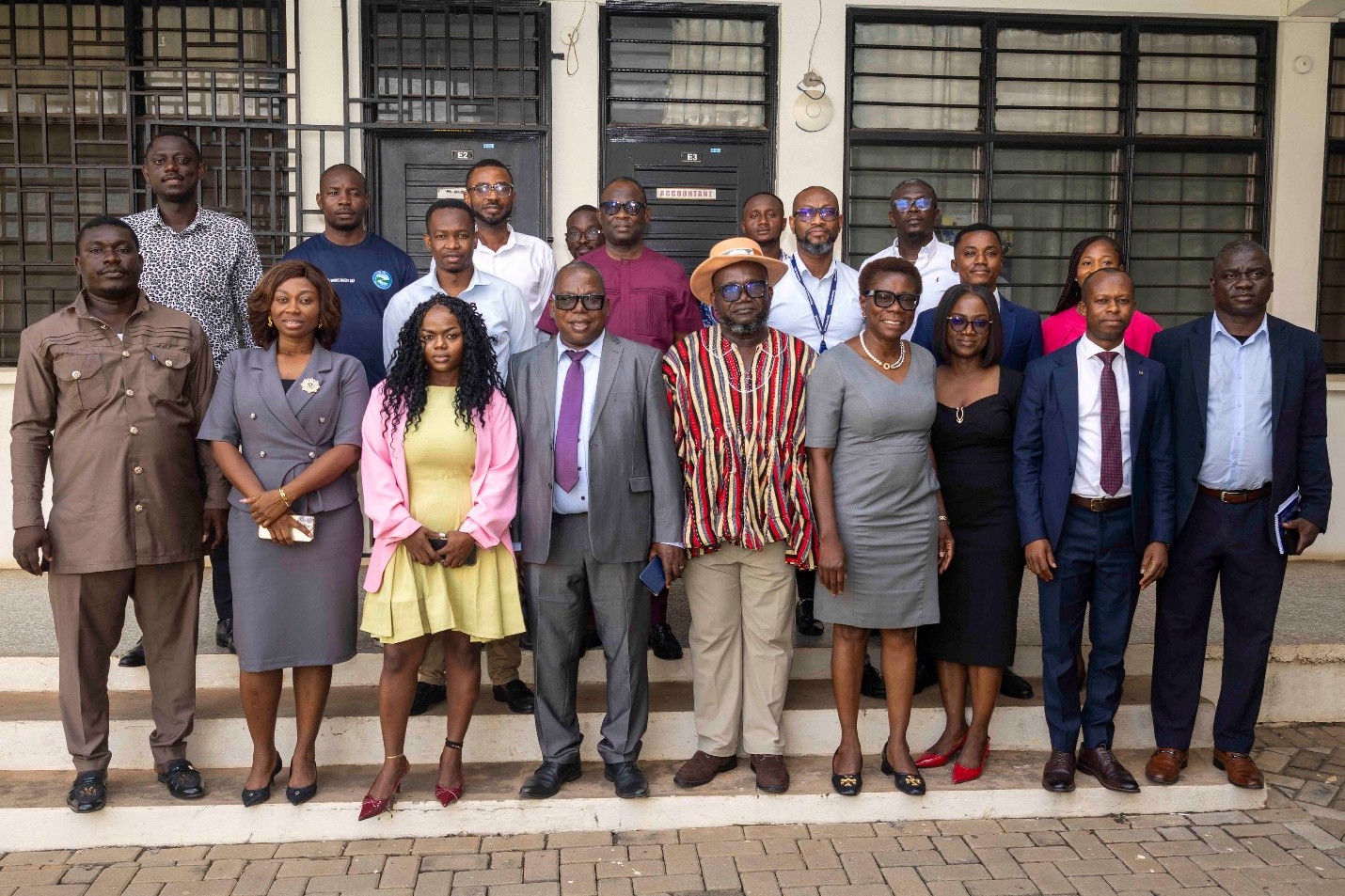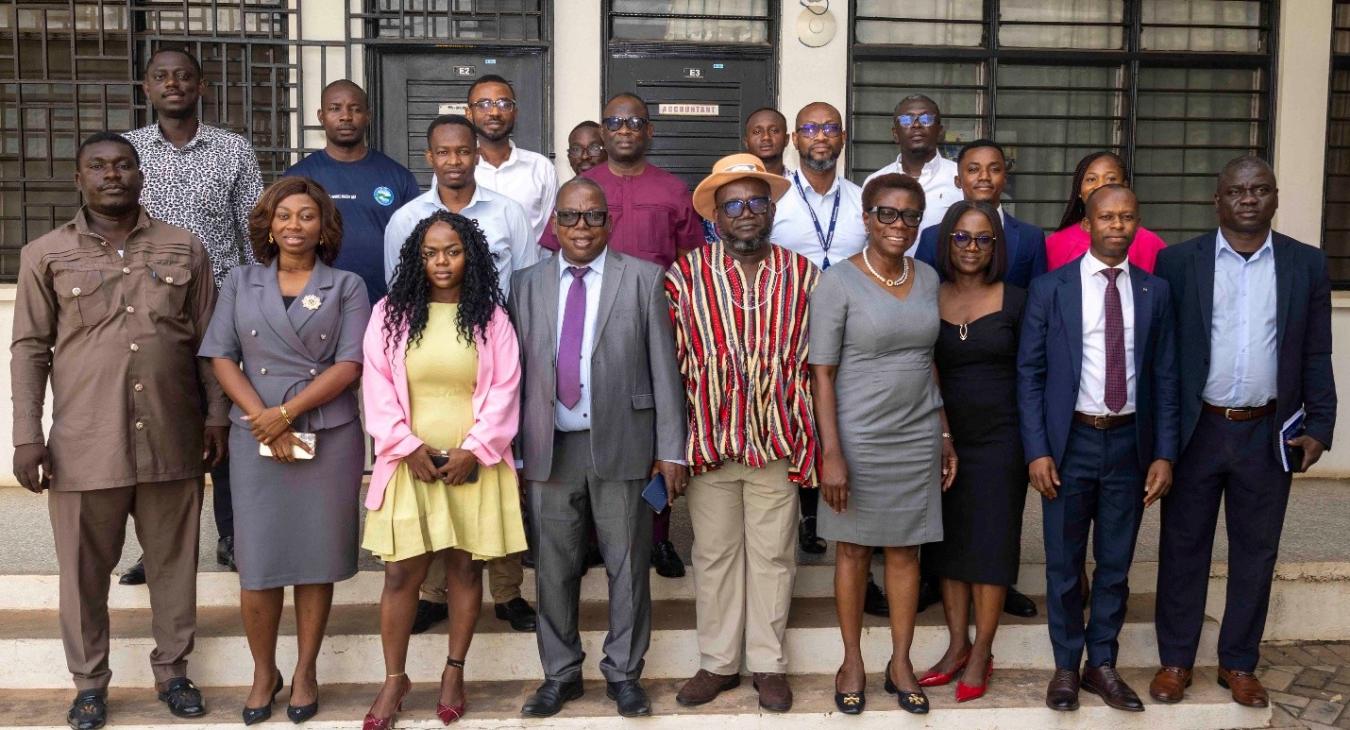
The West Africa Centre for Global Environmental and Occupational Health (WAC-GEOHEALTH), University of Ghana, has convened a high-level preparatory workshop to lay the groundwork for Ghana’s 2026 National Scoping Conference on illegal and unregulated mining. The meeting, held on 2nd December, 2025 at the WAC-GEOHEALTH, School of Public Health West Wing Building, University of Ghana, brought together researchers, policymakers, industry representatives and civil society actors determined to address the worsening environmental and public health impacts of illegal mining.
The workshop served as the first organised step toward building a coordinated national response to Ghana’s longstanding mining crisis. Although the country has extensive knowledge of galamsey and its consequences, stakeholders agreed that fragmented interventions, inconsistent enforcement and limited scientific data continue to undermine progress. The upcoming 2026 conference aims to unite all key actors to define priorities, strengthen evidence and stimulate coherent national action.

Opening the session, Professor Julius Fobil, Director of WAC-GEOHEALTH, traced the rise of illegal mining from the early 2000s and highlighted severe degradation of land, forests and water bodies. He noted that despite numerous government and civil society initiatives, national efforts “have not matched the severity of the crisis.” He called for a unified, scientifically grounded national framework that can drive decisive, long-term solutions.

Providing an overview of the proposed scoping conference, Mr. Maxwell Hammond, Project Consultant at WAC-GEOHEALTH, explained that the multi-day event would bring together policymakers, miners, researchers, funders and community leaders to define the full extent of Ghana’s environmental and health risks. The conference, he said, must confront land degradation, biodiversity loss, water contamination and the gaps in reliable scientific data. “We know the problems,” he remarked. “What we need now is evidence-based clarity and a united commitment to act.”

Stakeholders used the platform to underscore the need for Ghana to move beyond diagnosing problems toward decisive implementation. Togbe Eng. Kenneth Ashigbey, Chief Executive Officer of the Ghana Chamber of Mines, stressed that achieving legality requires “clarity and rigour,” urging broad representation at the 2026 conference. He observed that while academia provides valuable insights, these are seldom integrated into national strategies.
From the Ghana National Association of Small-Scale Miners, Mr. Abdul-Razak Alhassan raised concerns about widespread misconceptions that often group lawful operators with illegal miners. He attributed persistent governance failures to political interference, weak enforcement, poor infrastructure, limited financing and entrenched local interests.
Joining the meeting virtually, Mr. Erastus Donkor, Senior Editor at the Multimedia Group, presented striking photographic evidence from communities grappling with illegal mining beneath homes, roads and shops. He recounted the collapse of a household toilet facility in Odumase that killed a woman after miners dug tunnels under her home, an incident he described as symptomatic of the grave risks residents face. He also cited the destruction of cocoa farms, contamination of major rivers, including the Ankobra, Birim, Offin, Tano and Pra and laboratory evidence of high concentrations of heavy metals such as arsenic, chromium and lead. He warned that some water treatment facilities are nearing collapse and referenced new EU heavy-metal testing requirements for cocoa as further proof of international concern.
Mr. Benjamin Dwira, Managing Director of Logiest Group Limited, shared insights from reclamation efforts in the Amansie Central District of the Ashanti Region, highlighting that restored sites are being prepared for productive use, including agriculture, through the application of appropriate technology.

Participants identified several priorities for the 2026 conference, including a clear vision and defined goals; robust implementation and funding arrangements; strong monitoring and evaluation measures; and inclusive representation, particularly traditional authorities, communities, youth and artisanal miners. Many highlighted complex governance and security realities, noting that powerful local actors, coupled with political interference, continue to frustrate regulation.
The workshop closed with a renewed call for unified national action to confront the escalating environmental, economic and public health risks posed by illegal mining. Stakeholders expressed optimism that the 2026 National Scoping Conference, anchored in scientific evidence, inclusive dialogue and political commitment, could provide Ghana with its strongest opportunity yet to build a sustainable and well-regulated extractive sector. Preparations for the conference will continue over the coming months.
Participants included Dr. Thomas Agyei and Mr. Claudius Banangmwine Angsogna of Goldbod; Mr. Bernard Aninisjai-Kese of MESTI; Mr. Charles Evans-Anfom and Mr. Kwasi A. Boateng, CAIRNS; Mr. Frank Nansam-Aggrey of the Ministry of Lands and Natural Resources/Office of the President; Mr. Otu Solomon Kwame of the Ghana National Association of Small-Scale Miners; Ms. Zenobia Darkwa of Asanko Gold Ghana Ltd.; Mr. Emmanuel Asante; Mr. David Johnson of Newmont; Mr. Kaba Abakeh of the Water Resources Commission; faculty of WAC-GEOHEALTH; and international partners including Professor Brian Smart and Professor Douglas Armstrong of the University of Edinburgh.

The workshop was moderated by Mr. Carlos Calony, from the Multimedia group.